Livestream shopping in the United States and Europe did not collapse so much as shrink to fit: after a 2020-2022 hype cycle forecast China-style growth, Amazon, TikTok, Meta and independent startups all cut or narrowed their live commerce programs by 2023, and what survived by 2025 was a narrower practice, built on scheduled shows in demo-friendly categories, that works for some retailers and no longer pretends to be a mass channel. The Asia comparison that fueled the forecasts turned out to be a comparison with different infrastructure, not a preview.
What actually happened to the big Western launches?
The retreat is well documented in product decisions. Amazon Live continued but stayed a modest surface relative to Amazon's core; Meta shut down live shopping on Facebook in October 2022 and removed Instagram's live shopping features in 2023 as part of its broader commerce wind-down; TikTok, after running live commerce in the UK from 2021 with mixed results reported by Insider and others, launched TikTok Shop in the US in September 2023 with shoppable video and only limited live emphasis. Standalone startups told the same story: multiple live-shopping ventures, including ventures with major retailer partnerships, shut down or pivoted between 2022 and 2024.
Forecasts did not survive contact with behavior. Analysts including Coresight Research had projected American livestream commerce growing into the tens of billions of dollars within the decade, and the firm's own later reporting acknowledged slower realization. Western consumers trialed the format during pandemic lockdowns and did not retain the habit at scale once stores reopened. Retail media networks, meanwhile, absorbed the underlying spend: shoppable video, retail-site video and creator affiliate programs delivered the conversion benefits the live thesis promised without requiring audiences to show up at scheduled times.
Why does the format work in Asia but not the West?
The differences are structural, not cultural in any vague sense. In China, Douyin and Taobao Live plugged livestreams into mature ecosystems: super-app payments, deep discount infrastructure, a supply chain built to serve flash volumes, and years of host-loyalty around professional streamers, some of whom became national-scale figures. Taobao Live's top hosts generated documented billions of dollars in single-day volumes during events like Singles Day, a concentration of demand that had no Western equivalent. US and European markets split the components: payments sit outside social apps, discounts are retailer-controlled, logistics for flash volume is expensive, and the creator economy's monetization runs through brand deals rather than commission selling.
| Factor | China model | US/Europe reality as of 2025 |
|---|---|---|
| Payment rails | In-app, one-tap wallets | Webview checkout, card friction |
| Discounting power | Host-negotiated flash deals | Retailer MAP constraints, thinner margins |
| Host economics | Commission professionals at scale | Creators earn via brand deals, not sell-through |
| Audience habit | Entertainment shopping normalized since 2016-2019 | Scheduled viewing never generalized |
| Platform investment | Core commerce strategy | Narrowed after 2022-2023 cuts |
Where does livestream selling still work in the West?
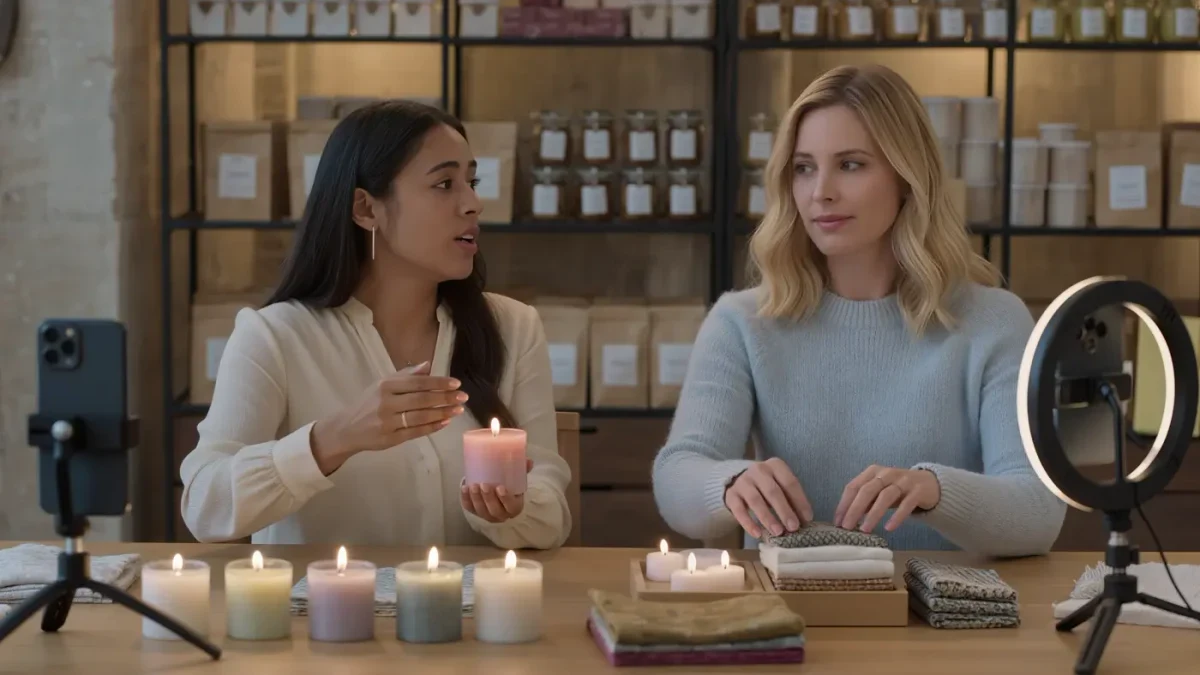
The documented survivors share traits: products that benefit from demonstration or authentication, audiences that already convene regularly, and inventory that tolerates event-style sales. Jewelry and gemstone sellers, numismatics, trading cards, beauty brands with founder-hosts, and collectibles platforms run recurring shows with real transaction volume. Qurate's QVC, the original Western televised selling model, keeps demonstrating that the underlying behavior, shopping as appointment entertainment, exists; what failed was the assumption that social platforms could port it to feed-native scale. TikTok Shop's live format has found pockets of traction in the UK and US among hosts who treat it as a full-time selling job, echoing the Chinese host economics rather than the creator-deal economics.
What replaced livestream shopping in Western budgets?
The spending did not vanish; it redistributed into three successors with the same underlying logic. Shoppable video and in-feed product tags carry the video-plus-checkout combination without the scheduling requirement. Creator affiliate programs, most prominently TikTok Shop's commission structure, supply the trusted-presenter element with performance pricing. Retail media networks, Amazon's foremost, absorbed the conversion-optimized video spend that live was meant to capture, offering closed-loop measurement against actual purchases. Each successor solves a specific failure of the live thesis: no appointment viewing, no host-payroll risk, no unreliable attribution. Marketers evaluating the space in 2026 should therefore benchmark against these three mechanisms rather than against the retired live formats, because the competitive question is no longer whether to run live shows but whether video-driven selling is measured wherever it now actually occurs.
What should brands take from the correction?
Three practical lessons hold. First, distrust channel forecasts built by transplanting another market's numbers without its infrastructure; the livestream case is now the reference example. Second, separate the format from the mechanism: the mechanism that worked, video plus trusted presenter plus easy checkout, migrated into shoppable video and creator affiliate storefronts, which is where Western budgets went. Third, test live where the unit economics are provable, in demo-driven categories with scheduled audiences, and measure it as event retail rather than as always-on social spend.
Europe's experience tracked the American one with local wrinkles. UK TikTok Shop live selling found firmer footing than most experiments, helped by earlier platform investment from 2021, while continental markets saw retailer-led pilots on proprietary apps rather than platform formats, reflecting stricter consumer-protection rules around promotions and returns. Regulatory friction, distance-selling rules, cooling-off periods and liability for defective flash inventory, raised Western operating costs in ways Asian platforms never faced at home, a structural cost that hype-cycle forecasts rarely priced in.
The status as of early 2026 is stable and modest: no major Western platform positions live shopping as a strategic priority, a defensible niche runs on discipline and category fit, and the Asia benchmark remains what it always was, a description of a different system. Marketers who kept the 2021 slide decks would note that nearly every projection in them was revised downward twice, which is itself useful data about how channel forecasts get made.