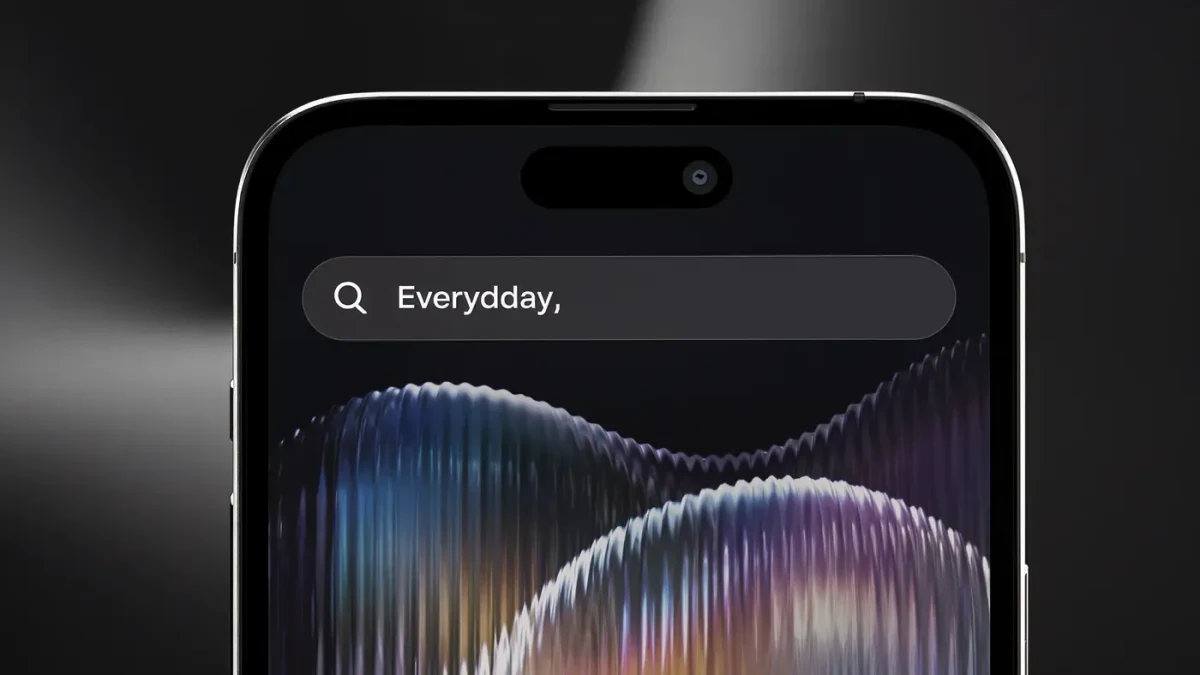
Social content now surfaces through two distinct search systems: in-platform search, where users query TikTok, Instagram and YouTube directly, and external engines, where Google has for years indexed and ranked public social pages in results. Google's own Search Central documentation (2025) confirms public social content can appear in web results, while younger users' shift toward searching inside apps — a trend Pew Research Center has tracked in its platform usage studies (2024) — makes in-platform keyword optimization a writing skill, not a gimmick. The practical takeaway for a social team is that caption text, on-video text, spoken words and alt text all function as indexed copy.
How Does In-Platform Search Actually Work?
Platform search matches queries against the text and signals a post carries: caption keywords, on-screen text, spoken audio where the platform transcribes it, hashtags and engagement history. TikTok's creator documentation (2025) advises keyword use in captions and on-video text; YouTube indexes titles, descriptions and transcripts for search inside the platform. Instagram similarly allows caption and alt-text search on some content types. The writer's controllable levers are caption keywords, spoken opening lines and on-screen titles — three surfaces that should name the topic in the words a user would actually type, not in branded phrasing.
What Can External Search Engines Do With Social Posts?
Public social pages can rank in Google results when they are crawlable, public and text-bearing, and Google's documentation treats them like any indexed page: unique text matters, and platforms that render content behind login are effectively invisible. Three implications follow. First, public YouTube videos and public text posts are the social formats most likely to surface externally, because they carry substantial crawlable text. Second, duplicating the same caption across platforms adds nothing externally and little internally. Third, a post written only in slang or branded coinage matches no query anyone types — descriptive language is the indexing price of discovery.
Which Surfaces Should Carry Keywords?
Keyword work on social is placement discipline, and the placements differ by format.
| Surface | Indexed by | Writing rule |
|---|---|---|
| Caption first line | Platform search, some external | Name the topic in user wording early |
| Spoken audio | TikTok, YouTube transcription | Say the topic in the first sentence |
| On-video text | Platform search | Open with a descriptive title card |
| Alt text | Platform search, accessibility | Describe the image including named entities |
| Hashtags | Platform search, weakly | Few, topical, not sentence fragments |
The table understates one point: alt text exists primarily for accessibility, and keyword stuffing it degrades a screen-reader experience that W3C's WCAG standards (2023, version 2.2) exist to protect. Accurate, descriptive alt text serves both goals simultaneously; keyword-first alt text serves neither well.
What Does Keyword Work On Social Not Fix?
Search optimization does not rescue weak content, because platform ranking systems weigh engagement history heavily — a keyword-perfect post that nobody watches will not rank for long, if at all. It also does not substitute for a distribution strategy: search surfaces content over months, while feeds reward the first hours. Teams should treat discoverability as a second dividend on good content, written in at production time at near-zero marginal cost, and measured separately — platform analytics increasingly report traffic from search as a distinct slice, and YouTube Studio has long separated search-driven views. A quarterly check of which posts earn search traffic tells a team which topics have durable query demand worth writing toward again.
Where Is This Heading?
Two developments have already changed practice. Conversational and AI-assisted search increasingly cites public web sources, making descriptive, self-contained captions more valuable when content gets quoted or summarized. And platform search behavior keeps skewing toward question- and need-shaped queries, which favors posts whose first line answers a specific question plainly. Neither trend requires new tooling; both reward the same discipline — write what the content is, in the words people use to look for it, in the surfaces the platforms actually index. That is the entire primer, and it is stable advice precisely because it depends on how search fundamentally works rather than on any single algorithm detail.
What Does A Practical Keyword Routine Look Like?
The routine is lighter than traditional SEO because platform search has no rank-tracking industry attached. A workable monthly pass: type the topic into the platform's own search field and record what the autocomplete suggests, since suggestions are a direct sample of real query demand; scan the top results to see which phrasings the platform currently rewards; and check the account's analytics for posts earning search traffic, noting which words they carry. From that evidence, maintain a short list of the account's ten to fifteen recurring query phrases — the topics the brand permanently wants to be found for — and require that any post on those topics uses the phrase naturally in its first line and, for video, in the spoken opening. This is minutes per month per platform, and unlike algorithm-chasing tactics, it compounds: every indexed post written in real query language keeps working long after its feed distribution stops.