Community event programming works when it is predictable: members build attendance habits around rhythms they can remember, and the format matters less than the fact that it happens on schedule. The reference point is the Ask Me Anything format, popularized on Reddit, where a fixed structure and scheduled time — rather than production value — created durable recurring engagement at massive scale. The programming lesson transfers directly: cadence beats spectacle.
Why Does Cadence Matter More Than Format?
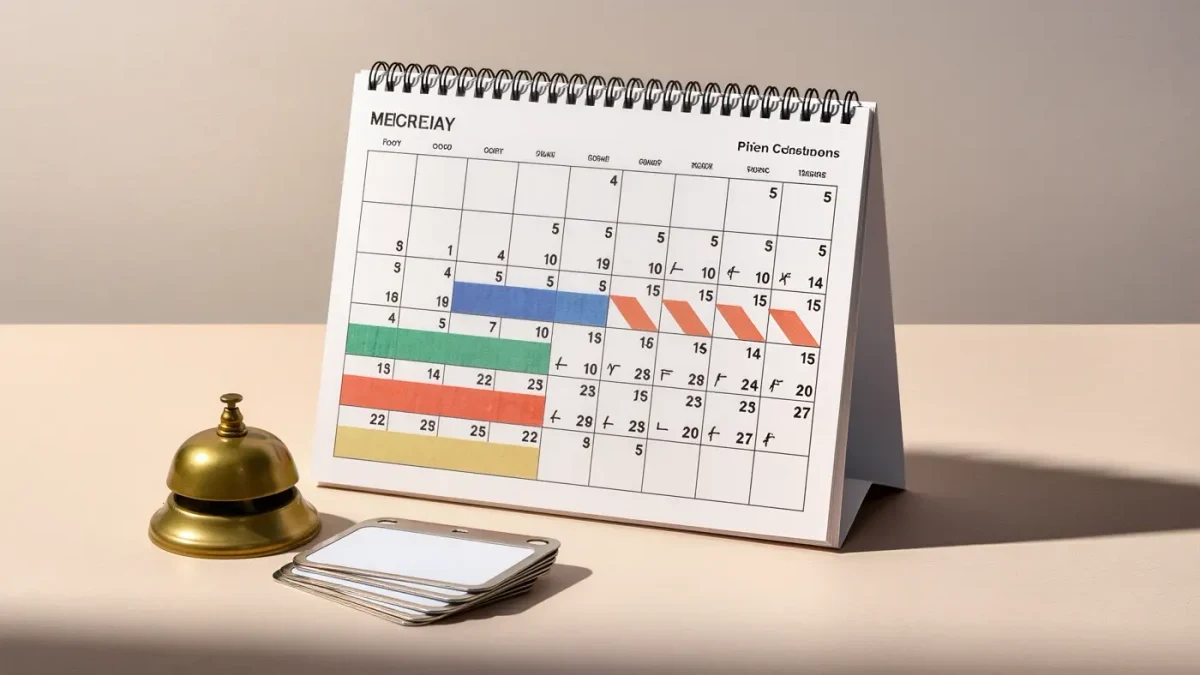
Habits form around cues, and a fixed weekly slot is a cue; a monthly event on a shifting weekday is not. Practitioners consistently find that the same event at the same time each week accumulates a regulars crowd within two or three months, while better-produced irregular events never build a base. Attendance stability, not peak attendance, is the target metric.
Cadence also disciplines the organizing team. A weekly commitment forces lightweight formats that survive busy weeks; a quarterly commitment invites overproduction that cannot be sustained and collapses after two editions. The most common programming failure is not bad events but ambitious cadences abandoned quietly, which teaches members that the calendar is unreliable — a lesson that takes months of consistency to reverse.
What Event Formats Serve Communities Well?
Four format families cover most needs. The Ask Me Anything, popularized on Reddit, gives access to a named person on a schedule. Office hours are recurring drop-in problem-solving. Showcases and demos let members present work to peers, which converts audience into community. Working sessions — co-working, study groups, sprints — put members side by side on parallel tasks, producing relationships as a byproduct of shared time.
| Format | Cadence | Primary Value | Staff Effort |
|---|---|---|---|
| AMA | Monthly | Access to expertise | Medium |
| Office hours | Weekly | Support, activation | Low |
| Showcase | Monthly | Member recognition | Medium |
| Working session | Weekly | Peer bonding | Low |
| Annual flagship | Yearly | Identity, milestone | High |
A common weekly pattern pairs a low-effort recurring anchor — office hours or a working session — with a monthly marquee event and, where budget allows, one annual flagship that gives the community a shared milestone and a reason to celebrate publicly.
How Do You Set the Right Cadence From the Start?
Start below capacity and hold the line. A cadence that survives the team's worst month is the right cadence; anything designed for the best month fails. Choose slots by member data — timezone distribution and when the community is already active — and never move a recurring slot once set, because each move resets the habit clock for the entire base.
- Audit member timezone spread and existing activity peaks in the community.
- Pick one weekly anchor slot and hold it fixed for at least a quarter.
- Add one monthly marquee format once the weekly anchor fills reliably.
- Review attendance stability at week 12; adjust format, not the slot.
- Add the annual flagship only when monthly programming runs without heroics.
The sequence resists the standard escalation trap: adding a second weekly event before the first is stable, which splits attendance and halves the energy of both.
How Do Recurring Meetings Stay Fresh Without New Formats?
Recurring meetings stay alive through rotation of content and hosts, not reinvention of format. A weekly office hours survives years when the question stream is real; it dies when hosts exhaust topics and begin filling time. The refresh mechanisms that work: rotating hosts drawn from the member core, themed editions where the structure stays and the subject rotates, and periodic guest editions that give regulars something new without changing the slot members remember.
Recording policy is a recurring-meeting design decision that teams underthink. Recordings serve absent members and build a searchable archive, but recording changes what attendees say — candid questions move to private channels. A workable compromise records the structured portion and keeps Q&A unrecorded, or alternates recorded and off-record editions for the same format.
What Does a Seasonal Programming Arc Look Like?
Strong programs are organized in seasons — blocks of 10 to 13 weeks with a theme, a beginning and an end — rather than as an infinite calendar. Seasons give the program marketable shape, create natural on-roints for new members at each season start, and give the team scheduled rest and planning weeks between blocks without signalling failure.
A typical year might run three seasons of weekly anchors with monthly marquees, separated by two intersession weeks for planning, plus the annual flagship. The seasonal rhythm also matches how professional communities actually behave: attention dips in late December and mid-summer, and programming against those dips wastes effort that a scheduled off-week would conserve honestly.
How Is Event Programming Measured?
Measure habit formation, not registrations. The metrics that matter: returning-attendee rate across editions of the same format, the share of attendees who arrived without a reminder, and post-event activity — whether attendees post in the community within 48 hours. Registration counts and one-off peak attendance flatter programming without indicating that it is building anything.
Track cost per recurring attendee across formats honestly, including staff hours. Working sessions and office hours usually deliver the cheapest stable relationships; marquee events deliver recognition moments at higher cost. Both belong in a program; neither should be judged on the other's metric. When budget pressure arrives, the defensible cut is spectacle, not the weekly anchor — the anchor is the habit the rest of the calendar hangs from.
How Do Virtual, Hybrid and In-Person Formats Differ in Programming Terms?
The three modes serve different functions in a program rather than competing for the same job. Virtual formats carry the recurring cadence — weekly office hours, monthly AMAs — because they are cheap to attend and cheap to run, and habit formation needs frequency. In-person gatherings, rare and expensive, build the strongest ties and give the community its identity moments. Hybrid attempts to do both and, poorly run, does neither, because the remote half of the room becomes an audience for the room it is not in.
The programming rule for hybrid is to design for remote-first delivery: every session works as a virtual experience, and the in-person room is treated as an enhancement rather than the main event. Sessions that depend on hallway energy — workshops, unconference blocks, meals — should simply be scheduled as in-person-only rather than hybrid, with honest labeling, so remote members are never sold a degraded version of something whose value they cannot access.
Frequency allocation follows cost per tie formed. Virtual recurring events run weekly because they must; flagship in-person events run annually or quarterly because they can. A defensible annual pattern is weekly virtual anchors, monthly virtual marquees, and one in-person gathering whose content feeds the virtual program for months afterward — recordings, transcripts and templates from the in-person event become the year's richest programming material at zero additional production cost.