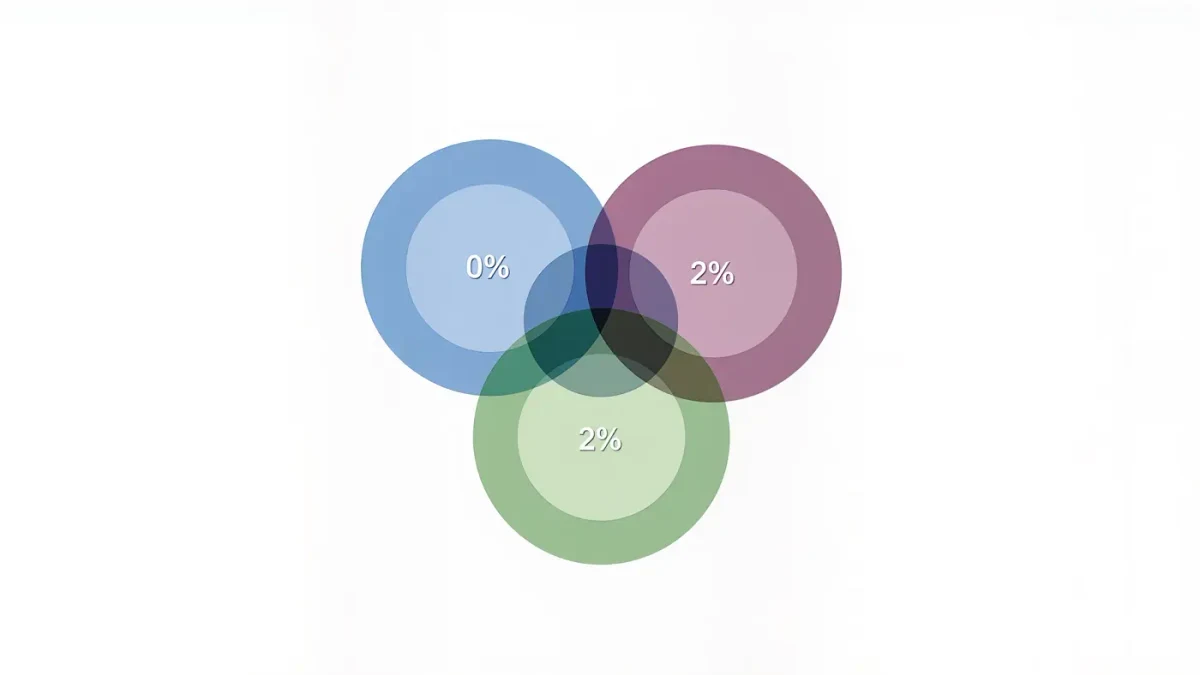
The paid-earned-owned framework still works, but only if it is treated as a map of money and control rather than of channels. Paid media is exposure bought outright, earned media is coverage and word of mouth obtained by merit, and owned media is what the brand controls directly, its site, lists and accounts. The model, popularized in agency planning in the early 2010s, has blurred because the same asset now moves between all three categories in a single campaign: a brand pays a creator, whose post earns organic amplification by an algorithm, on a platform the brand does not own, driving traffic to a site it does.
What are paid, earned and owned media?
Paid media covers advertising in every form: social ads, search ads, retail-media placements, sponsorships and influencer fees. Earned media is publicity the brand did not pay for directly: press coverage, organic sharing, reviews, community discussion and word of mouth. Owned media is the brand's controlled properties: website, app, email lists, podcasts, communities and social accounts, with the standing caveat that social accounts are rented land, since the platform controls reach and rules. The framework's value is that each category carries different costs, risks and degrees of control, and budget decisions still reduce to those variables.
Why did the boundaries blur?
Four documented shifts did the blurring. Creator marketing made earned-style content a paid product: a sponsored post looks like organic endorsement but is a contracted ad, and disclosure rules, from the FTC's endorsement guides updated in 2023 to the EU's coordinated influencer enforcement, exist precisely because audiences cannot tell the categories apart. Platform algorithms converted paid reach into a necessity for owned channels: Facebook's years-long decline in organic brand reach, acknowledged in its own 2014-2018 communications, meant that owned social accounts increasingly require paid amplification to be seen at all. Retail media networks made owned properties, retailer websites, into paid channels sold by auction. And dark social moved earned conversation, private shares, group chats and DMs, out of measurable view entirely, so earned media became simultaneously bigger and less observable.
| Classic category | Assumed control | Blurred reality |
|---|---|---|
| Paid social ads | Full control of message and reach | Delivery governed by auction and platform policy |
| Earned creator post | Merited, credible, independent | Often a contracted deliverable with usage rights |
| Owned social account | Brand controls the asset | Platform controls reach, format and rules |
| Owned retail presence | Brand's product page | Visibility resold as retail media placement |
| Earned word of mouth | Measurable via listening | Largely shifted to private, unmeasurable channels |
What does the blur look like in practice?
A typical 2025 campaign sequence shows every boundary crossed. A brand pays a creator for an integration, paid. The creator's post performs well organically and the platform's algorithm distributes it beyond the follower base, earned amplification on rented infrastructure. The brand licenses the post and runs it as an ad, paid again, with earned styling. Customers discuss it in group chats and leave reviews, earned, mostly dark. The brand emails its list about the collaboration, owned, driving to its site, owned, where a search ad or retail-media slot may have already introduced the product, paid. Asking which bucket the campaign belongs to is a category error; asking where money, control and risk sat at each step is the workable question.
How should modern teams use the framework?
Re-anchor the categories to decision variables. Money: did the brand pay for this exposure, and on what pricing model, auction, flat fee, commission? Control: who can edit, move or delete the asset, and who can change its distribution rules overnight, a question every platform-policy change from 2021 onward made concrete? Risk: what happens to the channel if the platform changes, as TikTok's 2025 US legal episode demonstrated for reach-dependent brands. Under those variables, the framework regains precision: owned means contractual control, paid means purchased certainty, earned means credibility that must be merited repeatedly and cannot be stockpiled.
Practical implications follow. Audit reach by control level, not by channel label, because an owned label on a rented platform overstates security. Budget for conversion between categories, licensing earned content into paid, using paid to seed owned subscriptions, since the blur is also an arbitrage opportunity. And keep disclosure discipline absolute, because the regulatory direction on both sides of the Atlantic treats disguised paid content as a violation regardless of how organic it looks, and the credibility that earned media exists to deliver is destroyed the moment audiences detect the disguise.
Is the model still worth teaching?
Yes, as a first map and no further. The framework's enduring lesson is older than the terminology: bought attention is certain but rented, earned attention is credible but fragile, and owned attention compounds. Every blurred line since the 2010s has reinforced that hierarchy rather than dissolved it, which is why the model survives in marketing curricula even as practitioners complain, correctly, that no channel sits cleanly in one bucket anymore.